
The story of Italian immigrants did not end at the dock—it continued through the generations as families became, in time, Italian-American. That long process of assimilation reshaped names, language, and identity, and it left fingerprints all over the records you will search. Understanding how and why your family changed as it settled is both a moving part of the family story and a practical aid to research, because so many genealogical puzzles trace back to the choices of assimilation.
The changing of names
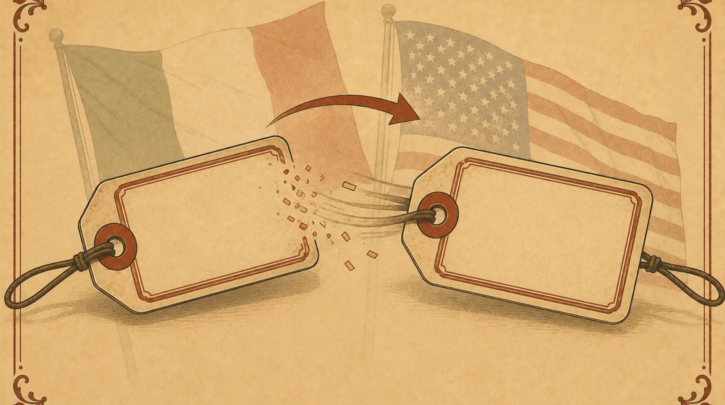
Among the most visible changes was the name. As we explain in our Ellis Island guide, names were not changed by officials on arrival—they changed gradually and voluntarily afterward, as immigrants and especially their children sought to fit in. Surnames were shortened or respelled; given names were anglicised—Giovanni to John, Giuseppe to Joseph, Vincenzo to James, Concetta to Connie. For the genealogist, this means the American name is a clue to, not a copy of, the Italian original, and finding your family in the Italian records depends on recovering that original form.
The loss of language
Language often faded over three generations in a familiar pattern: the immigrants spoke Italian (usually a regional dialect); their children were bilingual, speaking dialect at home and English outside; their grandchildren frequently grew up speaking only English. Pressure to assimilate, and sometimes shame or discrimination, accelerated the shift. The result is that many Italian-American families lost the language within living memory—a loss that, for descendants today, is one of the most poignant and one of the most reclaimable parts of their heritage.
Identity across generations
Italian immigrants often did not initially think of themselves as “Italian” at all, but as people of their town or region—Sicilian, Neapolitan, Calabrese. A unified Italian-American identity formed in the new country, forged in the shared experience of migration, the Little Italys, and the response to prejudice. Over time, as discrimination eased and generations intermarried, Italian identity for many became a proud but partial inheritance—celebrated at the table and the festival even where the language and the specific town had been forgotten.
Recovering the original Italian name and town is the genealogist’s task—and the gateway back. The immigrant-ancestor guide and the research guide show how.
Why assimilation matters for research
Nearly every distinctive challenge of Italian-American genealogy grows out of assimilation. The anglicised name that hides the original; the lost dialect that left no one to ask; the family that no longer remembered the town because being simply “American” had once been the goal—each is a research obstacle with assimilation at its root. The flip side is that understanding the process points you to solutions: look for the original name, expect the three-generation language shift, and treat the immigrant generation’s own records as the truest record of who the family was before it changed. In recovering those facts, many descendants find they are also beginning to reclaim what assimilation set aside.
The generational rhythm of change
Assimilation tended to unfold in a recognisable three-generation rhythm, and recognising it helps you anticipate what each generation’s records will show. The immigrant generation kept the Italian language, the regional identity, and close ties to the home town, often living within the Little Italy and intending—sometimes—to return. Their children, born or raised in the new country, were the bridge: bilingual, balancing the home culture against the pressure to be American, often the ones who anglicised the name. Their grandchildren were frequently fully assimilated, English-speaking, perhaps married outside the community, with Italian identity reduced to food, festival and family lore.
This rhythm is why the immigrant generation’s own records are so precious: they capture the family at its most Italian, before the changes set in, with the original name and often the town. It is also why so many descendants today feel a generation or two removed from a heritage that was vivid in living memory—and why recovering it has such emotional force.
Discrimination and its echoes
Assimilation was not only a choice; it was often a response to prejudice. Italian immigrants, especially southerners, met significant discrimination—in housing, work, and public life—and the pressure to shed visible markers of difference, including the name and the language, was real and sometimes coercive. Understanding this context lends compassion to the family story: the grandparent who refused to teach the children Italian, or quietly changed the surname, was frequently making a hard, protective choice in a hostile time. For descendants, learning this history is part of understanding not just what changed in the family but why—and part of the impulse to reclaim what was set aside under pressure.
Recovering what was changed
For the genealogist, the practical work of assimilation is reversal: recovering the original facts that the family altered or let fade. The anglicised surname must be traced back to its Italian spelling; the given name “John” must be recognised as Giovanni in the Italian records; the forgotten town must be recovered from the immigrant generation’s own documents. Each act of research undoes, in a sense, a small piece of assimilation—restoring the Italian original that the pressure to belong had overwritten.
There is something fitting in that. Many people come to Italian genealogy precisely because assimilation worked: the language is gone, the town is forgotten, the name looks American, and they want to recover what was lost. The research that recovers the original name and the ancestral comune is, for many, the first step in a larger reclaiming of a heritage that a hard century quietly set aside—turning the story of assimilation from an ending into the beginning of a return.